
by Mark G. McLaughlin (with input from Fred Schachter)
Introduction by Ancient Civilizations of East Asia (ACEA) co-designer, Fred Schachter: What a game design/game development journey it’s been from ACIS, to ACME, and now to ACEA! The team, which includes those who’ve helped play test, proofread and refine the system over the years, have us three designers’ heartfelt gratitude.
As explained, by designer Chris Vorder Bruegge’s Designing the Third GMT “Ancient Civs” Game: Ancient Civilizations of East Asia (Part 1 of 2) – InsideGMT there are a number of salient differences between ACEA and its two predecessors, particularly how players may use its Cultural Development Tracks Display to make this game something of a “Civilization Development” contest. For more regarding this exciting, fun, and fascinating ACEA feature, see: An Overview of Ancient Civilizations of East Asia’s Cultural Development Tracks – InsideGMT.
But ACEA still includes “take that!” card play options which allow players to inflict the kind of natural and man-made travails that so historically plagued ancient east Asia. But what cards does ACEA include to tantalize, challenge, reward, and torment its players? To answer that question, a series of InsideGMT articles, “It’s all about the Cards: Exploring the Karma Card deck of Ancient Civilizations of East Asia” here commences with this Part I. This series shall provide a bit of historical reference for each of the game’s 110 cards as well as images of the play test cards with apropos quotes, from a variety of sources, which Mark McLaughlin selected for them. Imagine how striking these will appear with GMT’s excellent production graphics! Ah, the fun to be had!
This particular chapter includes the game’s Must Play Invasion Cards. For a description of how such a card works, see this example of Ancient Civilizations of the Middle East’s “Mountain Tribes Descend” Barbarian Invasion card: ACME_Playbook_76pp.pdf. ACEA’s invasion cards use the same game mechanic.
With that, take it away Mark!
As with its predecessors (Ancient Civilizations of the Inner Sea and Ancient Civilizations of the Middle East, or ASIS and ACME, respectively), the cards quite literally “rule” the game. The 110 cards come in eight “flavors” (or types), the most important of which are the seven Event Cards – cards, which are often referred to (and quite properly) as “The Seven Deadly Events.” These cards are landscaped printed for easy and immediate identification from the game’s other Karma Cards.
What makes these cards both “the most important” and the “deadliest?” There are three reasons:
First, they MUST BE PLAYED and PLAYED IMMEDIATELY anytime they are drawn – and for ANY reason, including to determine what a non-player civilization does when presented with a choice. (Yes, ACEA, as its predecessors, offer this option… which facilitates solitaire play.) Thus, the event cards shown cannot be avoided (with one exception – a unique “Negate Card” – but more on that another time).
Second, THEY ARE ALMOST ALL UNIVERSARILY BAD NEWS, especially for the victimized player who is frequently the player in the VP lead. Why is that? Well, because of the third reason:
Third, the PLAYER IN LAST PLACE GETS TO DECIDE HOW TO PLAY THEM!
This last point is intentionally unique to the Ancient Civilization series. It helps level the playing field. It gives the player in last place a reason to hope. It is both a chance to reign in the player in first place, or the ability to take sweet revenge upon a player who has been particularly nasty to them.
It is also a mechanism to help the player in last VP place by giving that player a leg up in diplomacy. This can be either by offering a deal to one player to inflict pain on another player in return for a promise of some kind that benefits the player in last place, or by using the card on some insignificant peripheral part of the board where its effects are limited rather than utterly devastating the leader, again, in return for a promise to take action to benefit the player in last place. Such “benefits” can be as simple as agreeing to not play an “evil” card that would hurt the player, or to refrain from placing black disks in an area important to the player in last place. Although such “promises” are unenforceable, woe to the player who reneges, as they are unlikely to find any mercy from the other players.
Ah the wheeling and dealing which can occur between the players! So, without further ado, here are the Seven Deadly Cards:
Card #104: Font of Knowledge
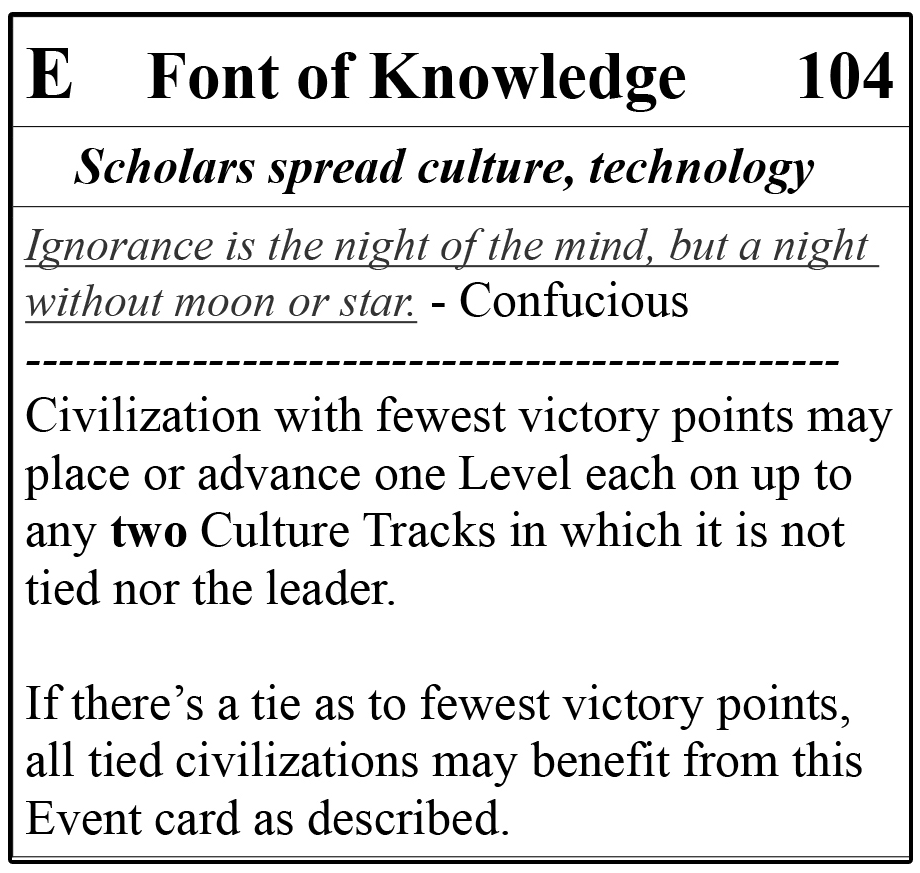
This is probably the least “deadly,” as it does not directly strike at the leader but instead gives the player in last place a much-needed boost on the Culture Tracks. Historically, this represents a major advancement or breakthrough in science, the arts, or government, or a revival or “renaissance” that restores the former glory of a civilization that has fallen behind its neighbors. It can also make it much more difficult for the leader to attain the “Mandate of Heaven” automatic victory, as they now have another civilization breathing down their neck to challenge their potential domination of the Culture Tracks and the various benefits the Display’s Tracks provide a player’s civilization.
Card #105: Time Marches On
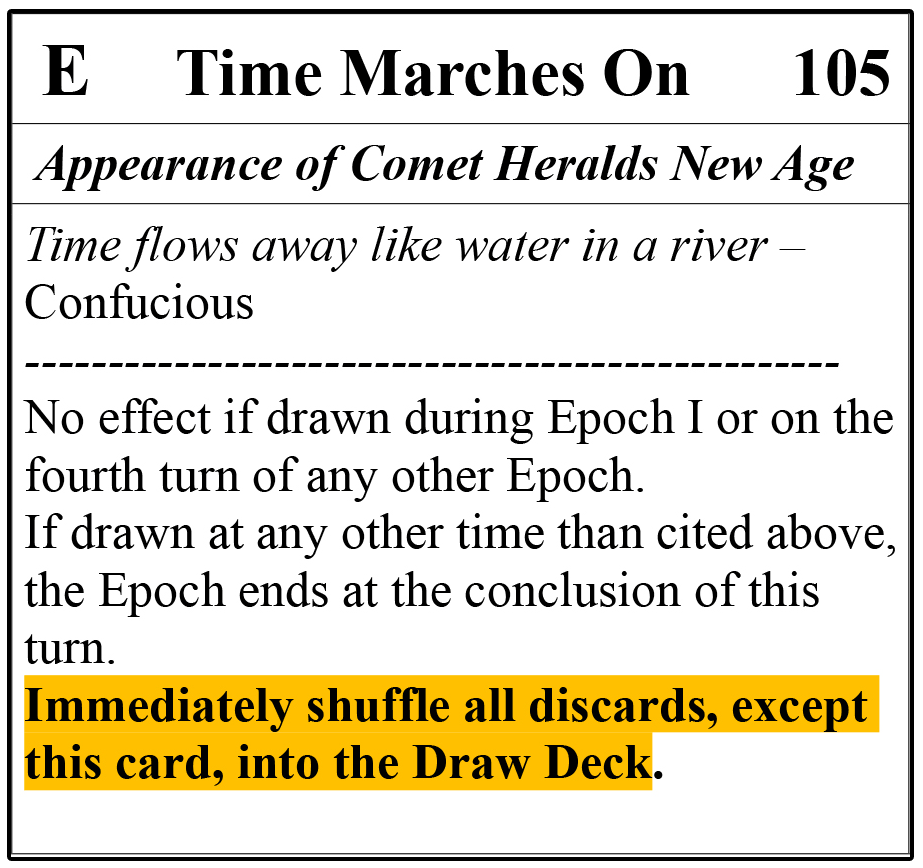
This card essentially “resets” the game clock. It immediately puts back into play cards which a player in the lead may have felt safe from seeing again (including any of the other Event Cards) which were in the Discard Pile and triggers an End of Epoch – with all of its (mostly dangerous for the leader) implications. An end of Epoch also means that instead of the leading player(s) getting or buying bonus cards to expand their Card Hand sizes, every player will begin the new Epoch with the same number of cards (five).
Card # 106: Pirate Hordes Descend

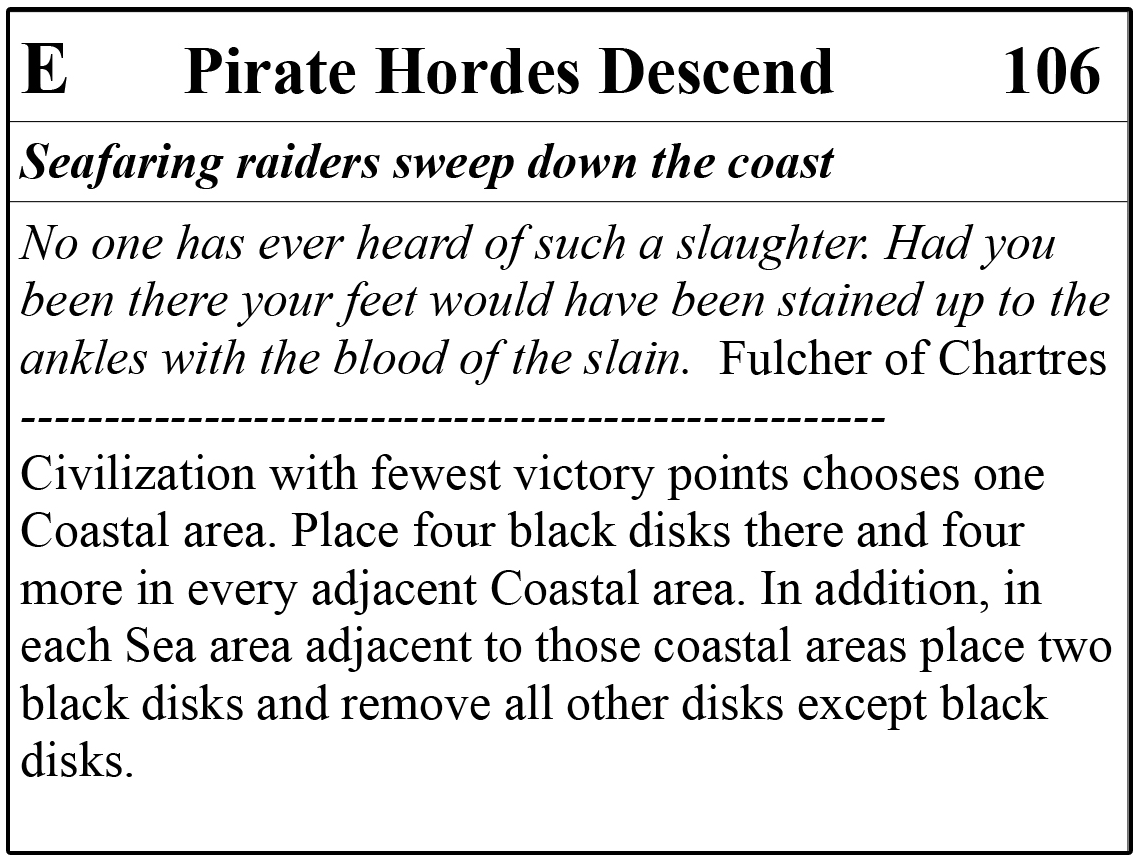
This is the first of the five truly nasty cards which the player in last place can inflict upon the leader (or any other player who has been particularly unpleasant to them). Piracy has been a major bane to civilized states since time immemorial, and particularly so in the eras covered in the game. Every major civilization along every coast of Asia at one time or another found itself subjected to invaders from the sea bent on robbery, rapine, and slaughter. The notorious “wokou” or “dwarf bandits” who plagued the coasts and seas around China, Korea and Japan from antiquity, well into the early modern era, are just one example of the many pirates who posed such a devastating threat to the ancient civilizations of East Asia.
Card #107: Steppeland Raiders
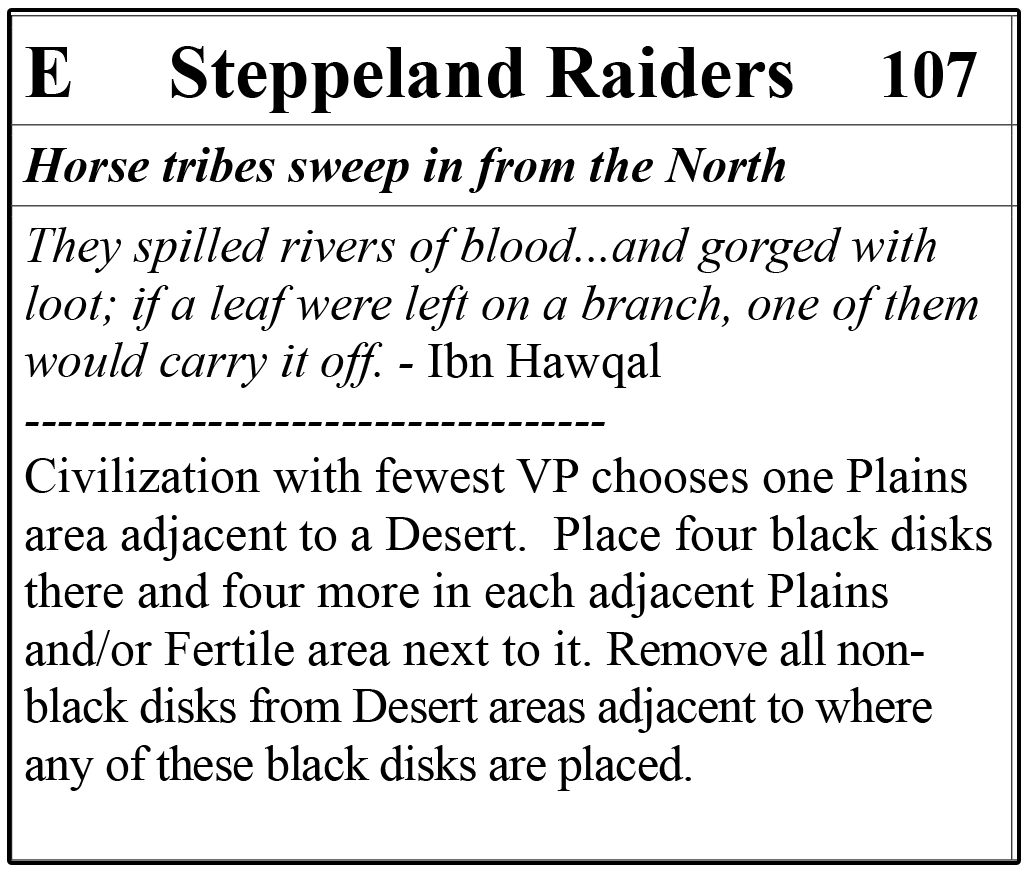
The nomadic horse cultures of the Central Asian steppes were an unending threat to ancient China. So much so that it spurred various Chinese emperors to undertake the construction of major defensive structures, the most famous of which, of course, is the Great Wall (which players can build in the game, not necessarily in its historic location, through having the most adjacent Stronghold counters).
Wave after wave of marauders from the steppes and deserts not only raided ancient China – they also conquered it (again and again). Huns, Mongols, Manchus and others (including the Xiongnu, which is one of the game’s two nomadic civilizations that can be chosen by players as their own) raided – and conquered – vast swathes of China right up until the early modern era.
Card #108: Jungle Warriors
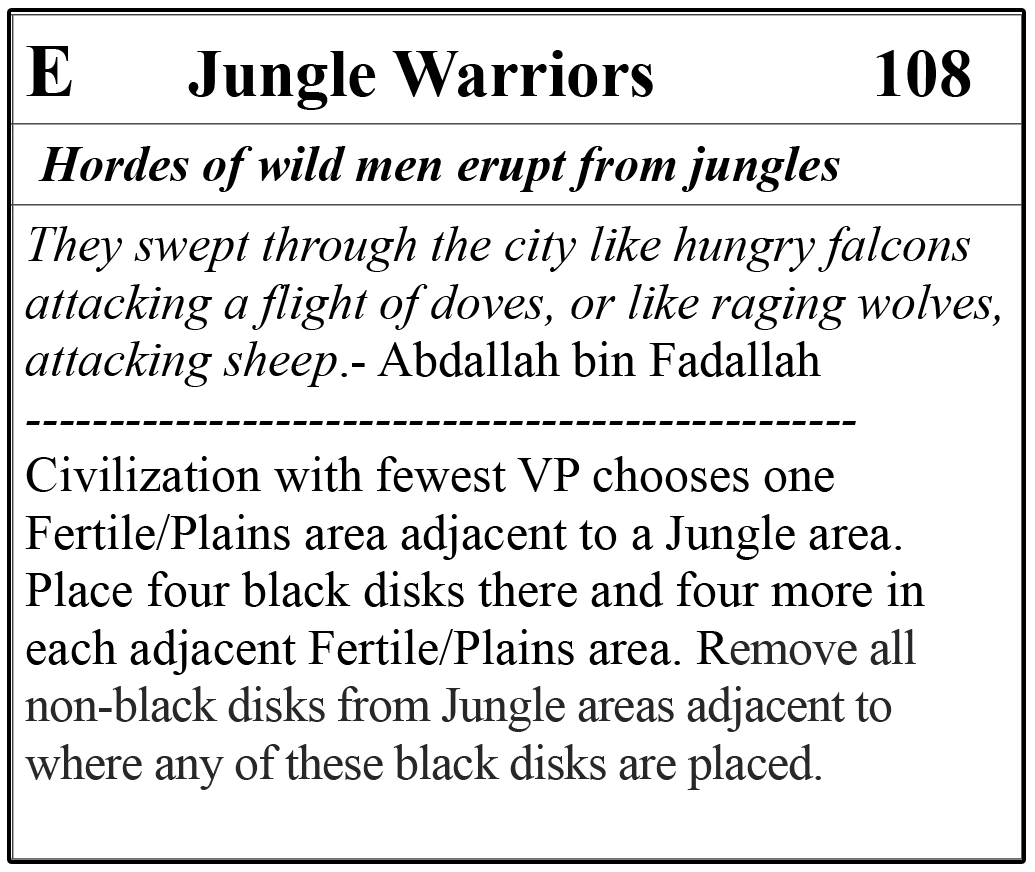
Just as the nomadic horse cultures ravaged and threatened China from the north, so did the civilizations of Southeast Asia need to fend off and subjugate tribes that sprung from the jungle areas to contest the growth of their civilizations.
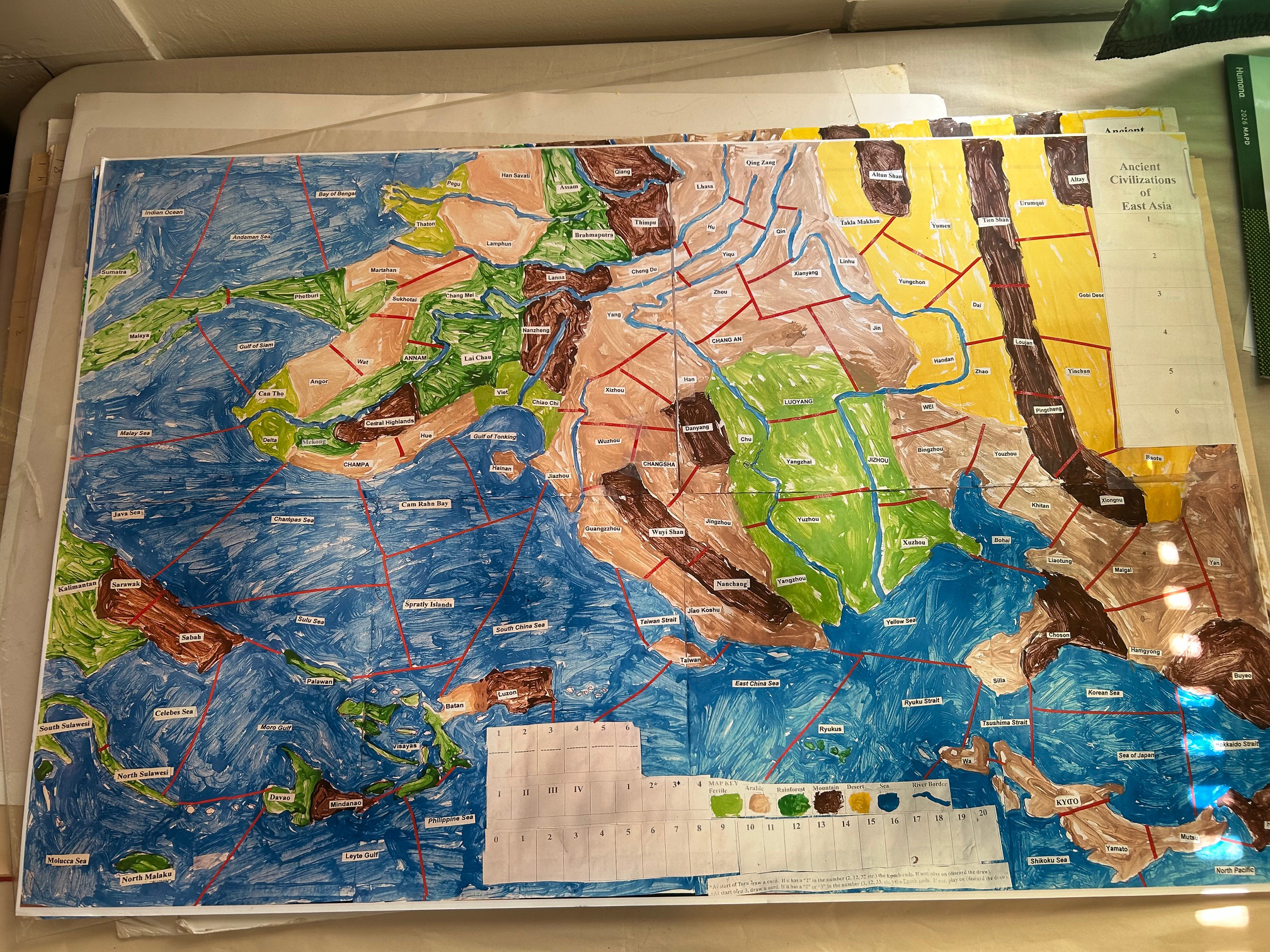
Kingdoms and empires that tried to spread into jungle areas, or in the areas adjacent to them, almost always met with staunch resistance from such warriors. See the ACEA playtest map to appreciate the potential threat these Jungle Warriors pose: ACEA_Playtest_Map.jpg (2016×1512)
Card #109: Fire from the West

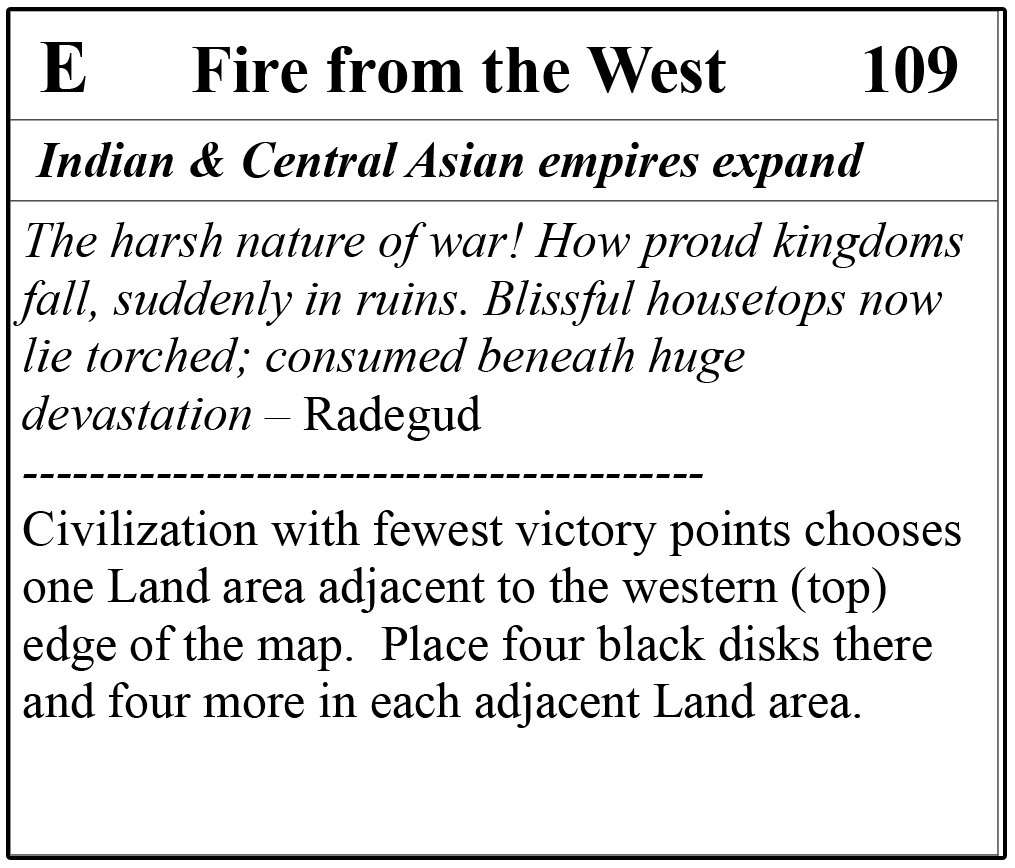
The civilizations of East Asia met their match when they tried to expand westward. Rival kingdoms and empires that grew to control Central Asia and India drew a line in the sand (or jungle) that could not be crossed – or which proved to be jumping off points for incursions into East Asia.
These sophisticated civilizations would on occasion mount their own incursions to upset the balance between the rival civilizations upon ACEA’s game map… oh the woe they can inflict! For example, examine the map and see the black disk placement grief such an invasion could inflict if “ground zero” is Qing Zang or Linhu, “Fire from the West” indeed!
Card #110: River Raiders

Not all invaders in East Asia were outsiders. Desperate peoples inside areas ruled by the civilizations of East Asia frequently rose up in rebellion or turned to piracy to strike back or merely to survive when threatened by kings and emperors – or in survival response to floods, earthquakes, droughts and other natural disasters that devastated their populations. Internal threats often proved more of a challenge to the rulers of a state than external forces, and as such were frequently more difficult to fend off.
So, there are the Seven Deadly Events – cards that can change the course of a game, topple the leader, level the playing field, or just give the player in last place hope…and a way to say to another player who has been particularly unpleasant to them to “take that!”
Next up in this series is Part II: If You Want a War Let it Begin Here…With the “Hateful Eight”.
Thank you for your interest in Ancient Civilizations of East Asia. To learn more of this GMT P-500 offered game, see: Ancient Civilizations of East Asia.