

Previous InsideGMT pieces alluded to Ancient Civilizations of East Asia’s Cultural Development Tracks being intrinsic to the game. This differs from the series two preceding titles, Ancient Civilizations of the Inner Sea and Ancient Civilizations of the Middle East where playing with a Cultural Development Tracks Display is entirely optional.
For more regarding ACIS and ACME’s optional Cultural Development Tracks, see: Optional Cultural Development Tracks for Ancient Civilizations of the Inner Sea (ACIS) and Ancient Civilizations of the Middle East (ACME) – InsideGMT. This will provide background regarding how ACEA’s version built and expanded upon this key design element… which adds a pronounced “Civilization Building” aspect to play in addition to being an historically justified “Civilization Survival” arena and is it ever still that!
First, here’s an image of Ancient Civilizations of East Asia’s Cultural Development Tracks Display being used for playtesting. Note the similarities to ACIS and ACEA’s versions but there are differences aplenty!
Incidentally, this and all other figures and illustrations of this article may be expanded, to better appreciate their details, via a mouse double click.
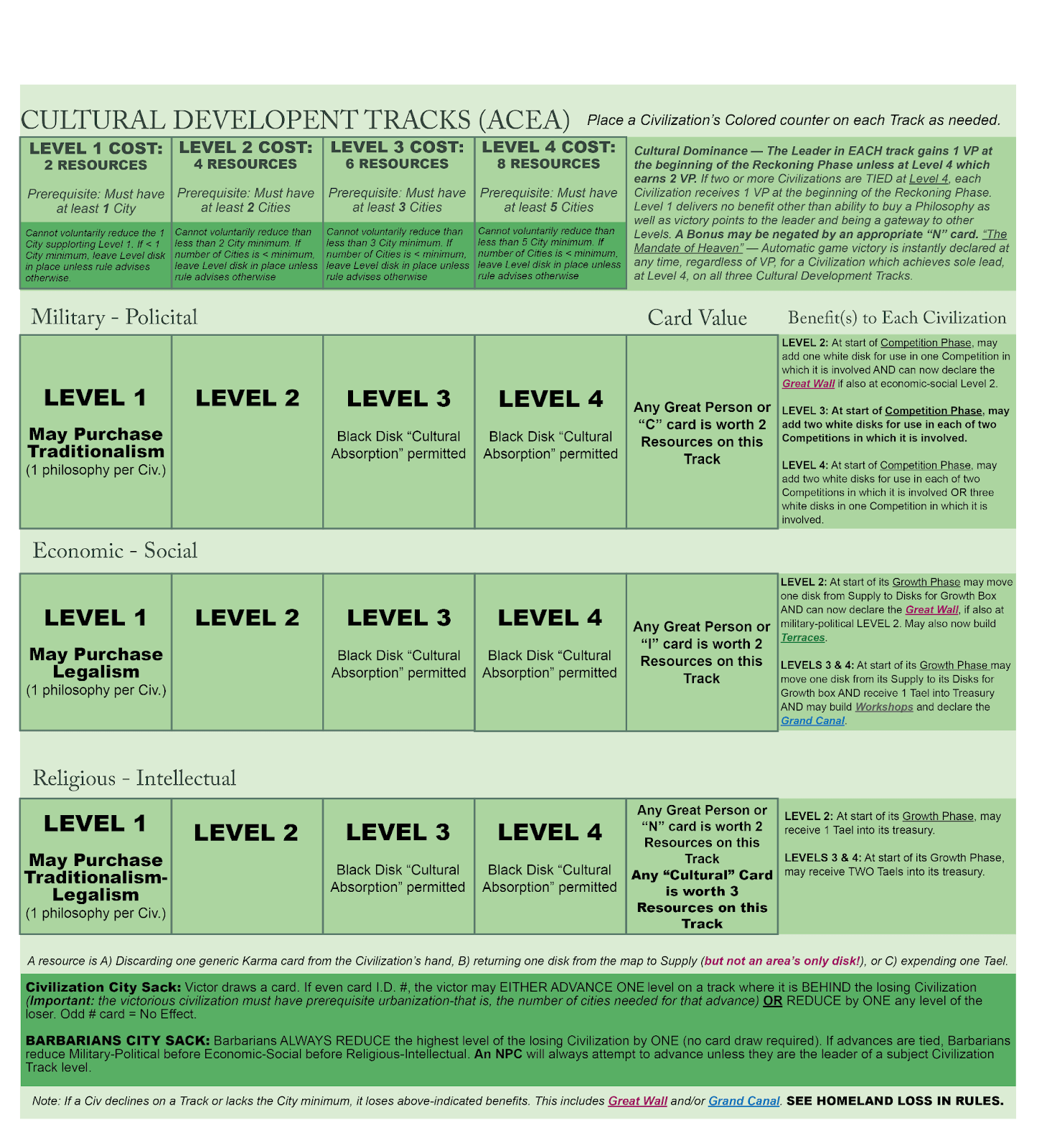
Figure #1: ACEA’s Cultural Development Tracks Display being used for playtesting. The production version will be more cleanly laid out on a beautiful, mounted, 11” x 14” folding board independent of the game board map.
But how does ACEA’s Cultural Development Tracks Display differ from ACIS/ACME’s? Building upon the approach used by ACEA Designer’s Chris Vorder Bruegge’s Designing the Third GMT “Ancient Civs” Game: Ancient Civilizations of East Asia (Part 1 of 2) article, let’s examine each Track of this ACEA Display and note salient similarities and differences to parse Figure #1’s image into its individual components. It shall then, hopefully, seem less daunting.
Acquiring a Civilization Display Track Advancement
First, how does a Civilization advance on each Track? This costs ACEA “Resources”, combined with a minimum number of Cities. A “Resource” is a tael (ACEA’s money), Karma card[s] from hand, and/or a Civilization’s disk[s] from the map… but never the only disk of an area.

Figure #2: Excerpt from ACEA’s Cultural Development TracksDisplay top row showing the prerequisites for advancing a Civilization’s colored counter onto a Level of each of the game’s three Tracks: Military-Political, Economic-Social, and Religious-Intellectual.
A City is a major milestone in any ancient civilization’s development and ACEA ably conveys this by having each Cultural Development Track advancement require a minimum number of Cities: one through five (for the highest Level 4 of a Track).

For a Civilization to place its counter upon a Level 1 space, it requires at least one City and costs 2 Resources, this is a gateway to a Track’s other Levels and permits a Civilization lacking a Philosophy to acquire one. Other InsideGMT articles have described the per turn benefits of a Civilization having “Traditionalism”, “Legalism”, or the hybrid “Traditionalism-Legalism”. Here’s a link to one of those articles which includes an image of a Civilization Display’s description of each Philosophy’s benefit: Meet the Jin (Wu): A Civilization of GMT’s Ancient Civilizations of East Asia – InsideGMT
A Civilization which loses the minimum number of Cities for a Level keeps its counter in that space and may only enjoy the benefit[s] of the Level it possesses the minimum number of required Cities. For example, the Shang Civilization advanced its counter to the Military-Political Track’s Level 4. From whatever Karma Card effects inflicted upon it by opponents, it is reduced to two Cities. Consequently, the Shang player now only receives the benefits of Military-Political Track Level 2 (see below). When it rebuilds to the minimum five required Cities, it may resume enjoying Level 4 benefits without spending associated Resources since its counter already occupies the Military-Political Track’s Level 4 space.
But, dear reader, you may wonder if a Civilization’s counter upon ACEA’s Cultural Development Tracks Display can decline and the answer to that, as was sadly the case all too often in history, is yes. This can occur through play of certain nasty Karma Cards and the looting/destruction of a Civilization’s City. See the color-highlighted “Civilization City Sack” rule reference at the bottom of Figure #1.
As consolation, the game has Karma Cards which facilitate free ACEA Cultural Development Tracks Display advancement as well as Event Card #104, Font of Knowledge, which allows the Civilization with fewest victory points to place or advance one Level each on up to any two Culture Tracks in which it is not tied nor the leader. This shows how knowledge can’t be suppressed, even to the Civilization lagging behind a cultural/military leading player or players.
There are also some rule reminders, which readers may find of interest, e.g. to the right of Figure #1’s Level 4 space (e.g. regarding a potential “Mandate of Heaven” automatic game victory).
The Military Political Track

Below is the ACEA Cultural Development Display‘s Military-Political Track.

Figure #3: Military-Political Track
Its highlights include:
- Level 1: If the Civilization does not yet have a Philosophy, placing its counter into this ACEA Cultural Development Display space entitles it to acquire TRADITIONALISM (two disks from Supply each Growth Phase).
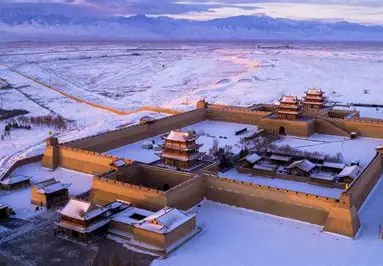
- Level 2 etc.: The Civilization may now receive a white disk for use in one of its Competitions. Each subsequent Military-Political Track space advancement increases this power with more white disks and flexibility in placing them. Furthermore, if a Civilization at Level 2 has also achieved Level 2 on the Economic-Social Track, it may declare the GREAT WALL. In ACEA, this is not the Great Wall as most may envision it, but as a “Fortified Zone” of individual Strongholds as pictured herein. Having ACEA’s Great Wall earns Victory Points and impedes placement of Karma Card inflicted black disks: which is nice to have if your Civilization is a game’s VP leader and you consequently have a big fat target upon your figurative back.
- Level 3 & Level 4: When a Civilization gets one or more of its Display counters to a Level 3 or Level 4 Track space, it qualifies for the Cultural Absorption optional power. This allows Card Phase play of any hand card for Cultural Absorption: What is this? Cultural Absorption removes all Black disks from a Land area (other than a “P” card’s” ground zero) if it occupies that area and has a controlled Land area adjacent to it. That Civilization then places 1 disk from Supply into that area. This represents an oft used strategy by many of ACEA’s Civilizations to convert “raw barbarians (sheng)” into “cooked barbarians (shu)”. To learn more of this ancient and fascinating cultural self-preservation approach see: raw vs cooked barbarians – Search
The Economic-Social Track
Below is one of the most impactful of the game’s Tracks: The ACEA Cultural Development Display‘s Economic-Social Track.

Figure #4: Economic-Social Track
Its highlights include:
- Level 1: If the Civilization does not yet have a Philosophy, placing its counter into this ACEA Cultural Development Display space entitles it to acquire LEGALISM (two tael into a Civilization’s Treasury each Growth Phase).
- Level 2: This not only gains an extra disk each turn, but as noted above for achieving Military-Political Track Level Two in conjunction with this Economic-Social Track’s Level Two, the Civilization may now declare THE GREAT WALL. Players should recall these are Fortified Zones… a multiple Stronghold defensive measure used by ancient China going back millennia. If interested, check out this related archeological discovery: Archaeologists Discovered 573 Ancient Fortresses Hidden in the Mountains
Getting to Level 2 lets a player build a Terrace/Improved Irrigation System counter in any controlled area other than desert. Since this helps better feed a burgeoning Civilization’s populace, each counter generates a disk every Growth Phase.
- Levels 3 & 4: Other than Level 4 allowing the possibility of a “Mandadte of Heaven” Sudden Death Victory for being the sole Civilization occupying all three Tracks’ Level 4 spaces, these two Levels allow a Civilization to earn both a disk and tael each turn. Either of these also permit use of the Cultural Absorption Rule (see above).

Furthermore, with these Economic-Social Levels, if a Civilization can connect two or more rivers with at least three of its Terrace/Improved Irrigation System counters and have the most of such counters on the map, it can declare the GRAND CANAL. Having the GRAND CANAL gets a VP each turn and at Epoch end. It also generates a disk or tael each Growth Phase. What a glorious engineering accomplishment for an Ancient East Asian Civilization to achieve!
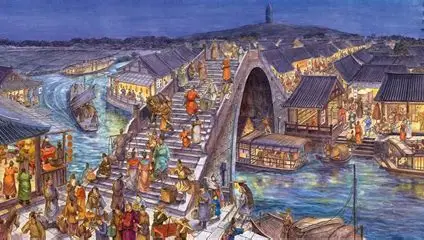
Lastly, attaining these Levels allows building a Workshop in any Controlled Land Area containing a City (three or more disks). A Workshop, if its City is intact and at least occupied by its owner, generates one tael each turn.
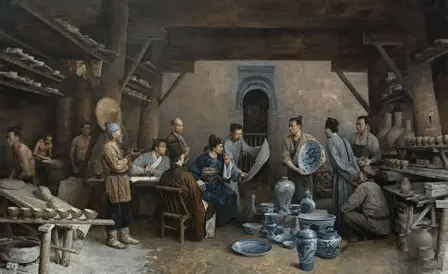
It should be noted that both Terrace/Improved Irrigation System and Workshop counters may be captured or looted by a rival Civilization during a turn’s Competition Phase. They are always, yes always, removed from the map should one or more black disks, the bane of Civilization (e.g. Barbarians or all sorts of sundry rebels) take control of their area.
The Religious-Intellectual Track
Below is the ACEA Cultural Development Display‘s Religious-Intellectual Track. Its purpose is to gain tael each turn (consider this income from an ancient Civilization-wide equivalent of “collection plates”).

Figure #4: The Religious-Intellectual Track
Its highlights include:
Level 1: If the Civilization does not yet have a Philosophy, placing its counter into this ACEA Cultural Development Display space entitles it to acquire TRADITIONALISM-LEGALISM (one disk and one tael each Growth Phase).
Level 2: This civilization gains an additional tael each turn.

Levels 3 & 4: Other than Level 4 allowing the possibility of a “Mandate of Heaven” Sudden Death Victory for being the sole Civilization occupying all three Tracks’ Level 4 spaces, these two levels allow a Civilization to earn two tael each turn. Either of these also permit use of the Cultural Absorption Rule (see above).
Conclusion
Further examination of the entire ACEA Cultural Development Display Figure #1 will convey other rule references to aid players. These include:
- VP Earning Criteria: to the right of the top row’s “Cost: 8 Resources”, Level 4 space.
- Card Values Beyond One Resource per Card: See the “Card Value” Column for details. Related Card Codes are… C = Competition, I = Investment, N = Negate, Culture Cards are coded Cu and Great Person is self-explanatory.
- Effect(s) of Civilization and Barbarian City Sacking: As previously cited, this is a tinted box at the bottom of the Display. Oh, what grief City Sacking can cause the victim Civilization!
Hopefully, experienced gamers, as well as those who’ve played the first two games of the series, Ancient Civilizations of the Inner Sea and Ancient Civilizations of the Middle East with its optional Cultural Development Tracks Display can now better appreciate how the GMT P-500 offered Ancient Civilizations of East Asia, the third game of the series, offers a different, interesting, and challenging twist to enthrall its players.
Thank you for your interest and time reading this InsideGMT article!

Author: Fred Schachter
